
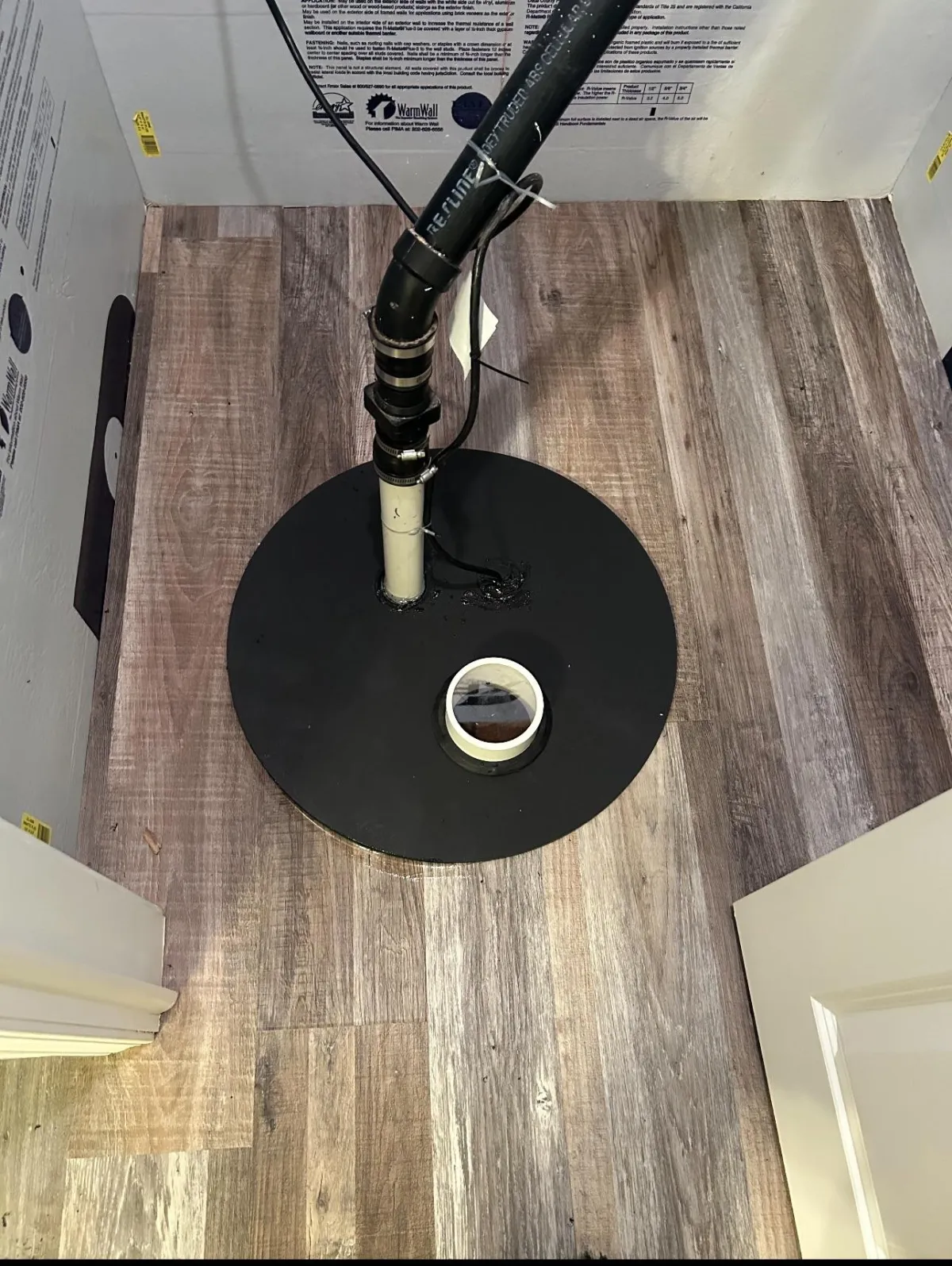
Can a sump pit be used for radon mitigation?
A sump can be part of a radon reduction design. EPA’s consumer guide identifies sump suction as an approach for some basement homes. Suitability depends on the actual pit and connected drainage arrangement; a pump in the basement does not automatically make it the best suction location.
For a St. Peters or Cottleville home with a finished lower level, take clear photos of the pit and surrounding space before the visit. Show the discharge piping, electrical cords and any backup equipment. Do not disconnect or modify those items to prepare for an estimate.
- Identify the main and backup pumps.
- Show the lid and pipe penetrations.
- Describe any history of water entry.
- Ask whether another suction location is preferable.
What does a sealed sump lid do?
A sealed sump lid separates the pit opening from the room while allowing the designed penetrations. The lid is part of the system detail, not a replacement for a radon fan or a radon test. The connection needs to accommodate the equipment that actually occupies the pit.
Ask how the lid can be opened when a pump needs service. A useful proposal explains both the seal and the access method. A homeowner should not be left guessing which fasteners or sealants are intended to be removed during routine maintenance.
If an existing cover is loose or damaged, photograph it and request a review. Avoid treating tape around a lid as proof that the radon system is complete. Document the repair and arrange whatever verification the professional recommends.
- Confirm a service access method.
- Identify how penetrations are sealed.
- Keep the installer’s instructions near the equipment.
Will radon mitigation affect my sump pump?
A suitable design must keep the pump available for its drainage function. Discuss pump replacement access, float movement, power supply and any backup equipment before accepting a proposed lid or pipe arrangement. These are inspection questions, not details to leave until the pump needs repair.
Tell the contractor if another company maintains the sump. Both sets of service instructions should remain understandable to the next person working there. When maintenance requires opening a sealed lid, ask who will restore the seal and check the radon installation afterward.
Call Air Sense Environmental at 314-664-9807 with your test result and photographs. The visit can establish whether sump suction is an appropriate proposal or whether another route should be evaluated. No particular sump conversion is promised without reviewing the house.
- Preserve pump maintenance records.
- Explain backup battery or alarm equipment.
- Record who restores seals after servicing.
- Keep the follow-up radon report with the installation documents.
Questions before you book
Does a sealed sump lid alone fix radon?
A lid alone does not establish that radon has been reduced. Evaluate the complete system and use a radon test to verify the indoor concentration.
Should I remove the cover before an estimate?
Ask the provider what access is needed. Photos are a useful starting point, and the existing pump equipment should remain intact.
Is the liquid gauge a radon reading?
No. A system pressure indicator is different from a radon measurement. A separate test establishes the radon concentration in the air.